
Showing posts with label handloom fabric seller. Indian. Show all posts
Showing posts with label handloom fabric seller. Indian. Show all posts
July 17, 2012
Organic Fabric, Hemp Fabric collection: Folksmarket.com


June 29, 2012
Geographical Indication registration process in India: Folksmarket.com
India is a vast country with
immensely rich traditions. It is innate to the soul of India that its folks
have been utilizing the Earth to make life of fellow folks useful. In the
process, Indians have truly developed their skill so much that it had taken a
form of a full-fledged industry which was appreciated by the world over.
However with the modernization knocking the door and traditional way of
production start replacing by the machine, the life of millions of such folks
reached to a cross-road.
The human hands
can’t match the pace of the machine.
At
the same time, this tradition remained their identity for centuries, how can
they just let it go?
Then came the realization of the
limitation of the machine and its monotonous effect, not to talk of the
environmental deterioration. The people at different corner of the world once
again found themselves appreciating the folks skill and folks traditions. But
then the dark side of the human greediness came. People knowing well the appreciation
of the different crafts start selling their own lower grade products under the
disguise. This is the precise reason why many times the sale of Darjeeling Tea
registered more than its actual production.
This spoofing is a double-edged
sword. On the one hand, it snatched the ethical right of the people of
different geography from their right of livelihood and on the other hand, it
also brings a sense of the disappointment among its connoisseurs for their
inability to appreciate the original product as they have experienced the
spoofed product.
The Uruguay round of WTO was the
harbinger of bringing a mechanism world over to prevent such anomaly in the
market.

As per TRIPS Agreement 1994, “Geographical
indications are, for the purposes of this Agreement, indications which identify
a good as originating in the territory of a Member, or a region or locality in
that territory, where a given quality, reputation or other characteristic of
the good is essentially attributable to its geographical origin”
The GI Act contains a system of
registration. Registration is prima facie evidence of validity. While
the initial registration is for a period of ten years, it may subsequently be
renewed. A GI may be registered under more than one class of goods.
Commensurate
with the TRIPS Agreement, the Government of India has drafted their own GI Act:
The Geographical
Indications of Goods
(Registration and Protection) Act (GI Act), 2003
How Geographical Indications product are registered in India
(This section owe a lot to a paper published by Mr Kasturi, Fellow, Center for WTO titled 'Social Economic Impication of GI' )
Section 11(2) of the GI Act
specifies the documentation requirements for applying for a GI in India.
Section 32(1) of the GI Rules replicates these provisions and in addition stipulates
a few more documentation requirements that include, among other things, the
following:
• A statement as to how the GI
serves to designate the goods as originating from the concerned geographical
territory in respect of specific quality, reputation or other characteristics
that are due exclusively or essentially to the geographical environment, with
its inherent natural and human factors; and the production, processing or
preparation of which takes place in such geographical location;
• The geographical map of the
territory concerned;
• The particulars regarding the
appearance of the GI as to whether it is comprised of the words or figurative
elements or both;
• An affidavit as to how the
applicant claims to represent the interest of the association of persons or
producers or any organization or authority established by or under any law;
• The standards benchmark for the
use of the GI or the industry standard as regards the production, exploitation,
making or manufacture of the goods having specific quality, reputation, or
other characteristic of such goods that is essentially attributable to its
geographical origin with the detailed description of the human creativity
involved, if any, or other characteristic from the definite geographical
territory;
• The particulars of the
mechanism to ensure that the standards, quality, integrity and consistency or
other special characteristic in respect of the goods to which the GI relates,
which are maintained by the producers, makers or manufacturers of the goods, as
the case may be;
• The particulars of special
human skill involved or the uniqueness of the geographical environment or other
inherent characteristics associated with the GI to which the application
relates;
• The particulars of the
inspection structure, if any, to regulate the use of the GI in respect of the
goods for which application is made in the definite territory, region or
locality mentioned in the application.
Upon receipt of an application, it is
scrutinized by the examiners and in case any deficiencies are found, a notice
is sent to the applicant to rectify them. After rectification, the applicant is
required to send her reply within one month from the date of receipt of the
notice. The next stage is the constitution of a Consultative Group of technical experts, chaired by
the Registrar, to ascertain the correctness or otherwise of the particulars
furnished in the application. Subsequent to examination, the Registrar may
refuse the application altogether or may accept it either absolutely or subject
to certain conditions, modifications, etc. Accordingly, on the basis of the comments
provided by the Consultative Group, an Examination Report is issued by the
Registrar.
Compliance, if any, is to be done within two months from the date of
communication of the Examination Report to the applicant.
Once the objections raised
in the Examination Report are satisfactorily responded to by the applicant, and
the application is accordingly accepted by the GI Registry, it is advertized in
the GI Journal, which is a bi‐monthly, bi‐lingual
(English and Hindi33) statutory publication. Upon advertisement, any person
may, within a specified time period (generally 3 months, but if needed 4
months), oppose the application in writing. If the application passes through
the specified time period unopposed, or in the event of an opposition,if it is
decided in favour of the applicant, the Registrar is required to register the concerned
GI as well as the authorized users and include the particulars in the GI Register.34
Upon registration of a GI, the Registrar is required to issue each to the applicant
and the authorized users a certificate sealed with the seal of the GI Registry.
Notably, the date of filing of the application is
deemed to be the date of registration.
June 17, 2012
4 ways to care your Cotton Fabric Apparels & Furnishing: Folksmarekt.com
Cotton is also referred to as White Gold
historically. The term is appropriate as it continues to play a dominant role
since 5000 years! Archaeologist have found cloth rags in Indus Valley
Civilization dated back to 3000 BC. In 1500 BC, the Rig-Veda (sacred Hindu
philosophy) hymn mentioned “threads in loom” which is generally accepted to be used for Cotton. Thus it is widely
believed that Cotton production started first from India. However the Egyptian
Civilization and inhabitants of Peru also knew about Cotton since ages.
Cotton is most widely used natural fibres throughout
the world. It requires sufficient moisture and heat to mature and grow quality
fibres. The fibres of Cotton are made up of cellulose. Cotton fibres are
attached to seeds inside boll of plant. A boll is made up of 6-7 seeds and near
about 20,000 fibres attached to each seed making number of fibres more than
100,000. The boll of the cotton plant is also known as Seed pod. Each fibre is
an elongated cell that has a hollow lumen inside that allows it to breath! The
adhesive quality is due to wax like outer coating.


The length of the fibre is major determinant of the
quality of the cotton. Generally long staple fibres are considered to be of
higher quality. Staple length is divided into short, medium and long.
è Short
staple is between 0.95cm and 2.4 cm in length
è Medium
staple is between 2.54 cm and 2.86 cm in length
è Long
staple could be anywhere between 3 cm to 6.35 cm
Cotton buyers buy cotton on the basis of length of
fibres (staple fibre), cleanliness, degree of whiteness and fibre strength.
Imporant Long staple cotton is Egyptian Cotton and
Pima Cotton. Pima Cotton is also called sometime as ELS (Extra Long Staple)
Cotton. Mainly grown in Peru, South West US and Australia, this is considered
to be one of the superior blends of cotton. Egyptian Cotton by far is the most
fine cotton. Towels and Sheets made from
Egyptian cotton are in great demand as
they are very soft and absorbs water quickly. Pima Cotton is similar to
Egyptian cotton. It has a little smaller staple than Egyptian cotton but still
it can be woven into dense and soft fabric.
So what makes this fibre so special? A look at its
properties will clear the air.
(Care to peek in some beautiful cotton fabric from www.folksmarket.com? Scroll till the end!)
(Care to peek in some beautiful cotton fabric from www.folksmarket.com? Scroll till the end!)
Properties
of Cotton Products
Cotton fibres are valued for its comfort, easy to
handle, affordability, natural breathing of air that soothes the skin and
ofcourse the ability of millions of weavers who use this nature’s gift
beautifully by making fabric for apparels, home furnishing, beddings, towels
and many other decorative items.
- Comfortable: Cotton has a soft texture and there is no surface irritant that brushes with the skin.
- Hydrophilic: Cotton absorbs moisture from our body. It has a strong affinity with water.
- The absorbed moisture passes through the cotton and evaporates that has a cooling effect on skin.
- Heat Conductivity: The heat conductivity of cotton is very good. This makes it dissipate heat quickly
- Fibres are strong and not prone to abrasion
- Fibres can be twisted, plied and stretched.
However couple of factors can also be enumerated unfavorably.
Notable among them are wrinkle prone fibre and dull color.
Nonetheless with the modern technique, the producers
have now overcome these difficulties. For example, cotton in its natural state
shrink by 3% but if pre treated it with certain chemicals, the effect can be
reduced. This is more so for the denim.
Moreover these days market is embracing with the fabric that is cotton blended with other fibre, like Silk and Linen.
Moreover these days market is embracing with the fabric that is cotton blended with other fibre, like Silk and Linen.
How
to wash cotton
No matter how the cotton is pre-treated, contraction
or shrinkage is inherent in nature of cotton. However, one can minimize the
shrinkage by bit extra care and following certain guidelines.
1- Always
hand-wash the cotton fabric. This is difficult for the busy people but it essentially
is the first step in fighting the shrinkage.
2- Be
it machine or hand-wash, always use the cold water rather than warm water. Hot
water agitates cotton fibre
3- After
washing, stretch your fabric, gently to neutralize its shrinkage after dry.
4- Dry
your clothes in natural sunlight. Using dryer etc make cotton fabric shrink
more.
The “White Gold” may lack color and luster but still
its most sought after natural fibre. The comfort of cotton is unmatched. This
is evident from the fact that Cotton fabric commands the major share of textile
industry globally.
To
choose wide range of cotton fabric, please visit Folksmarket.com. We have one
of the largest collections of fine cotton fabric (more than 350). Some of them
are listed below.


 |
| Cotton + Linen by Folksmarket.com |
 |
| Cotton + Silk, Zari worked by Folksmarket.com |
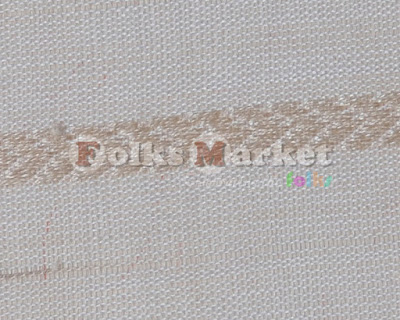 |
| Cotton + Silk by Folksmarket.com |

 |
| Cotton + Silk by Folksmarekt.com |
 |
| Cotton + Silk by Folksmarket.com |
 |
| Fine Mercerized Cotton Fabric by Folksmarket.com |
 |
| Pure Cotton Fabric (merc) by Folksmarket.com |
 |
| Pure Cotton Fabric by Folksmarket.com |

The
easy to use Add to Enquiry System makes your job much easier and convenient.
You don’t need to hop in different pages to see your fabric. The entire product
can be navigated quickly and with lesser hassles.
(Folksmarket.com
also offers blended cotton fabric; cotton-silk, cotton-jute, cotton-linen are all displayed
in our website.)
What
more?? All the technical and commercial information is readily available in
your first click. Literally!!
For
more enquiry, you may drop us a mail, shakti@folksmarket.com
or subhash@folksmarket.com or Folksmarket@gmail.com
You
can call us @ +91-9899275917/+91-9630338767/+91-9818170427
Subscribe to:
Posts (Atom)